How to play bingo in Canada
Bingo is a draw-based game where key choices are made before the numbers start being called. Players buy cards, a caller draws random numbers, and each matching number is marked until a card completes the pattern set for that round. For anyone learning how to play bingo in Canada, the two main layouts are 75-ball and 90-ball bingo, while the legal framework is provincial rather than national. Card prices, prize splits and jackpot conditions are set by each room.
-
100% bonus on the first deposit up to €150 + 150 free spins
- Fast withdrawals
- Crypto-friendly
- User-friendly website design
Providers:

 Payments:


 Betonred
- 5
-
100% welcome bonus up to €500 + 200 free spins
- Wide variety of games
- Easy-to-use interface
- Generous bonuses and promotions
Providers:
Payments:
Spinanga- 5
-
100% bonus on the first deposit up to $500 + 200 free spins on selected games
- Supports cryptocurrency payments
- Mobile-friendly design
- Large selection of live dealer games
Providers:
Payments:
Mr.Pacho- 5
-
Up to 200% bonus on their first deposit
- Wide range of betting options with high odds
- User-friendly website interface
- Reliability and fast withdrawals
Providers:
Payments:
-
100% bonus on the first deposit up to €500 + 200 free spins
- Over 2000 games from leading providers
- 24/7 customer support
- Fast withdrawal processing
Providers:
Payments:


Written by Ethan Montgomery
Fact-checked by Noah Campbell
Published: September 7, 2026
Last updated: September 7, 2026
Methodology: We explain bingo using verified card formats, number draws, winning patterns, prize rules, game variants, online features and Canadian regulatory context. Examples clarify gameplay and probabilities without presenting any system as a guaranteed way to win.
How to play bingo in Canada: quick start
Every round is built around four elements: the cards purchased, the random draw, the winning pattern and the claim. Once the cards have been bought, marking numbers does not change the outcome; it simply records what the caller has drawn. The core process for how to play bingo in Canada is therefore almost identical in a hall and online: enter a named game, follow the calls, complete the required pattern and claim the win.
A 90-ball card contains 15 numbers arranged across three rows, and the round ends at full house, when all 15 numbers are marked.
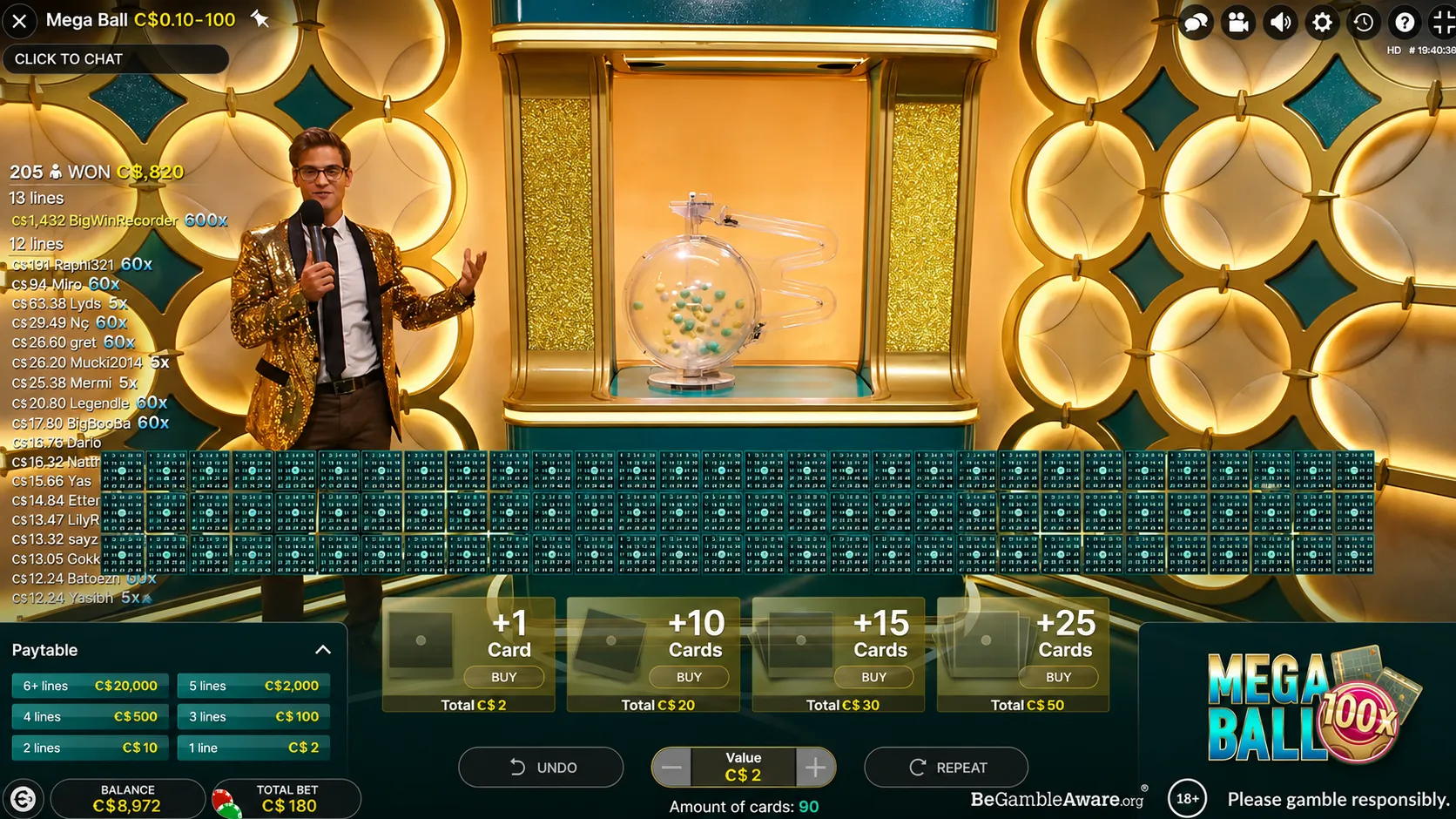
This complete bingo guide covers the key rules, card formats, winning patterns, prize mechanics and practical details players should understand before joining a game. Methodology: card formats and winning patterns are checked against room rulebooks, bingo availability is verified through the Ontario registry of licensed operators, and prize mechanics are described from room rules instead of promotional language.
Bingo in Canada rules and table setup

Two layouts cover almost every game. A 75-ball card has a 5×5 grid with a free centre square, and the first player to complete the announced pattern wins: a line, shape or full card. A 90-ball card uses a 9×3 grid with 15 numbers and settles three prizes in one game: one line, two lines, then full house. Canadian halls and online rooms offer both formats, with the pattern fixed before the first ball.
The order of play stays consistent from round to round:
-
Buy cards for a named game before sales close; each card applies only to that game.
-
Confirm the pattern being played – the room displays it beside the card price.
-
Wait for the opening call. The draw is random and cannot be affected by anything done on the player side.
-
Mark every called number across the cards held, or let auto-daub handle the marking.
-
Watch for cards that need only one more number to complete the active pattern.
-
Claim as soon as the pattern is complete: call out in a hall or let the online room register it automatically.
-
Check the confirmed prize before the next game becomes available.
Paper and online play differ most at steps 4 and 6. In a hall, a completed card that nobody calls can lose its claim after the next number is announced. Online, the software identifies the completed pattern and credits the player’s account directly and automatically.
Bingo in Canada bets, decisions and payout logic
There is no bet in the usual casino sense. The stake is the card price, paid once per game, and every meaningful choice comes before the draw. Anyone learning how to play bingo in Canada should read the prize structure first, because it determines whether the game pays a fixed amount or splits a pot built from card sales. Canadian rooms use one of those two approaches, as stated in the rulebook for each round.
|
Decision point |
What the player controls |
Effect on the prize |
|
🎫 Card purchase |
How many cards, before the game closes |
Sets the player’s share of all cards in that game |
|
🔢 Ball format |
A 75-ball or a 90-ball game |
75-ball pays one pattern; 90-ball pays line, two lines, full house |
|
🏆 Prize structure |
Choice of game inside the room |
Fixed amount, or a pot split from card sales |
|
💥 Progressive jackpot |
Opting into a jackpot game |
Pays only if the pattern closes inside the call limit |
|
🖊️ Auto-daub |
Switch on or off |
Marking only – no effect on the draw or the payout |
If two cards complete the pattern on the same call, they split the prize rather than receive it twice. In 90-ball bingo, line prizes are settled while the draw continues, and full house ends the game.
Bingo in Canada house edge, odds and rule variations
Bingo does not have one fixed house edge percentage comparable with blackjack or roulette. Instead, the room retains the part of card revenue that is not returned through the prize pool, and that retained share is defined game by game rather than by the ball format itself. For a single game, the player’s basic chance is calculated as cards held divided by cards in play. Holding four cards when 400 are sold gives a 1% chance of taking that game.
A crowded room creates a trade-off: with 400 cards in play, four cards represent a 1% chance, while the larger field can also build a bigger pot.
As participation rises, the prize pool can increase while each card holder’s chance becomes smaller. Progressive jackpots add another requirement: the winning pattern must be completed within a specified number of calls. If that call limit passes, the progressive prize rolls on, although the ordinary game prize is still settled.
|
Format |
Card layout |
Prize levels |
Pace |
|
🎱 75-ball bingo |
5×5 grid, free centre square |
One announced pattern per game |
Set by the caller |
|
🔵 90-ball bingo |
9×3 grid, 15 numbers |
Line, two lines, full house |
Longer round, three settlements |
Some operators also offer instant bingo-style games, which use a different player-paced format and should not be confused with scheduled 75-ball or 90-ball rooms.
Bingo in Canada beginner mistakes to avoid
Most first-session losses come from procedure, not bad luck. Six mistakes account for much of the money unnecessarily spent in Canadian bingo rooms.
-
Buying more cards than can be tracked after auto-daub is turned off.
-
Entering a progressive game without checking the call limit for the jackpot pattern.
-
Treating one card price as the total cost; a C$ session budget must cover every round.
-
Assuming the legal age is 18 across Canada when it is 19 outside Alberta, Manitoba and Quebec.
-
Playing from Ontario on a site that is missing from the provincial registry of licensed operators.
-
Changing rooms to chase a loss, even though it cannot alter the next draw.
Choosing a fixed card count and a fixed session spend can remove three of those six problems before the first number is called.
Playing bingo in Canada online
Canada does not license online casinos at the federal level; regulation is handled by the provinces. Ontario became the first province to license private operators: the AGCO regulates the sector, iGaming Ontario operates the market launched in April 2022, and the list of licensed operators is publicly available.
For example, LeoVegas CA is one of the private casino brands operating in Ontario’s regulated iGaming market, although the availability of bingo and other game categories depends on the individual operator.
Alberta followed in July 2026. In the other provinces, the offering is provided through a provincial platform – BCLC PlayNow, Loto-Québec Espacejeux, ALC and SaskGaming. On Ontario’s registry, bingo is available at Betty Gaming, Casino Time and Delta Casino, a shorter selection than for slots or live tables, and there is no national bingo top-10.
Availability varies by province, so how to play bingo in Canada online also depends on location. Where offered, free-play rounds use the same draw and patterns, showing the pace but not the prize split. Online bingo card prices are set per game and displayed in Canadian dollars (C$).
Comparing rooms usually comes down to a short checklist:
-
Ball count: 75 or 90.
-
Card price and the maximum number of cards allowed in one game.
-
Scheduled games compared with instant rounds.
-
Jackpot amount and the call limit attached to that jackpot.
-
Auto-daub, chat and the mobile layout.
-
Prize structure: a fixed award or a split of card sales.
Checking these points before joining a game makes it easier to choose a room that matches your preferred format, budget and pace of play.
Responsible Gambling limits for bingo in Canada
Deposit and time limits belong in account settings before a session starts, not while playing. On April 2, 2026, the AGCO announced approved standards for a Centralized Self-Exclusion program covering Ontario’s regulated online gambling market, allowing a player to block access to every regulated site through one action instead of applying separately to each operator.
Available exclusion terms are 6 months, 1 year and 5 years. Operators must stop sending marketing material within 24 hours after an entry, and iGaming Ontario administers the register. Canadian support options include ConnexOntario, BCLC’s GameSense, the Responsible Gambling Council and self-exclusion arranged through the relevant provincial operator.
Conclusion

Start with the format: 75-ball bingo offers one announced pattern and a shorter game, while 90-ball provides three prize levels in one round. Then check the prize structure – a fixed amount or a share of card sales – and the call limit on any progressive jackpot. Both appear in the room’s rulebook before purchase.
Availability comes third because Ontario and Alberta are the only provinces with public registers of private operators, while every other province runs its own platform. The rest of how to play bingo in Canada is discipline: set the card count, C$ spend and account limits before the first call. No draw game becomes dependable income, whatever an online bingo promotion may imply.
About Ethan Montgomery
Ethan Montgomery writes about Canadian online casinos, online bingo, slots, table games, and other gambling options for shawarmadeorzaottawa.ca. His content covers casino games, payment methods, operator terms, and provincial gambling regulations, with licensing information, payment re profile quirements, and responsible gambling details checked before publication.
Frequently Asked Questions
-
Start with one card in a scheduled 90-ball game and auto-daub enabled. The card has 15 numbers; the caller draws, and three prizes are settled in order – one line, two lines, full house. It shows the full mechanic without a stack of cards to track.
-
The key rules are the active pattern and the claim procedure. A 75-ball game pays the first completed announced pattern; a 90-ball game pays three stages in sequence. In a hall, an unclaimed win can pass to the next call, while an online room settles it automatically.
-
Bingo has no universal fixed house edge. The room keeps the share of card revenue not returned as prizes. A player’s chance is cards held divided by cards sold – four of 400 is 1% – so a busier room can mean a bigger pot and a thinner chance.
-
Age is 19, or 18 in Alberta, Manitoba and Quebec, with deposit and time limits set in the account. Self-exclusion runs through the provincial operator, while Ontario’s Centralized Self-Exclusion register blocks all regulated sites at once. ConnexOntario and GameSense provide support.