How to play poker in Canada
Learning how to play poker in Canada is easiest with Texas Hold'em, the format most beginners meet first. Each player receives two private cards, up to five community cards appear on the board, and betting runs through preflop, flop, turn and river. You can win by showing the strongest five-card hand or by making every opponent fold before showdown.
-
100% bonus on the first deposit up to €150 + 150 free spins
- Fast withdrawals
- Crypto-friendly
- User-friendly website design
Providers:

 Payments:


 Betonred
- 5
-
100% welcome bonus up to €500 + 200 free spins
- Wide variety of games
- Easy-to-use interface
- Generous bonuses and promotions
Providers:
Payments:
Spinanga- 5
-
100% bonus on the first deposit up to $500 + 200 free spins on selected games
- Supports cryptocurrency payments
- Mobile-friendly design
- Large selection of live dealer games
Providers:
Payments:
Mr.Pacho- 5
-
Up to 200% bonus on their first deposit
- Wide range of betting options with high odds
- User-friendly website interface
- Reliability and fast withdrawals
Providers:
Payments:
-
100% bonus on the first deposit up to €500 + 200 free spins
- Over 2000 games from leading providers
- 24/7 customer support
- Fast withdrawal processing
Providers:
Payments:


Poker differs from a fixed-odds casino game. The room may charge rake or a tournament fee, but players compete against one another, so there is no universal paytable or house-edge percentage. Position, stack size and decisions matter alongside the cards. Real-money access also depends on provincial rules, making eligibility the first check before joining a table. More rule-based content is available in the Canadian casino guides section.
Written by Ethan Montgomery
Fact-checked by Noah Campbell
Published: September 7, 2026
Last updated: September 7, 2026
Methodology: We explain poker using verified rules, hand rankings, betting structures, table formats, house or tournament procedures, Canadian regulatory context and responsible-gambling guidance. Examples are used only to clarify mechanics, not to predict outcomes.
How to play poker in Canada: quick start
A beginner does not need advanced strategy to follow a Hold'em hand. First learn when action reaches you and which five cards form the final hand.
The blinds start the pot before any cards are dealt. Each player receives two hole cards; the flop adds three community cards, while the turn and river add one each. Between deals, players can fold, check, call, bet or raise when allowed.
The dealer button sets position and moves around the table. Acting later means seeing more opponents decide first. At showdown, use the best five-card combination available from the seven cards; both hole cards are not required. The five community cards are shared by everyone still in the hand, not assigned to individual seats.
Before real-money play, check the stakes, rake or tournament fee and house rules. That keeps the first session focused on decisions rather than mechanics.
Poker procedures were checked against published tournament and house rules, while Canadian access and responsible-gambling details were verified against current provincial sources.

Poker in Canada rules and table setup

A Hold'em table uses a 52-card deck, a dealer button, chips or an account balance, and two forced opening bets called blinds. The button usually moves one seat after each completed hand, so every player rotates through early and late positions.
The hand follows a fixed order. Learning that order first makes the available actions much easier to understand.
-
Post the blinds. Place the small blind and big blind before the deal to create the opening pot.
-
Deal two hole cards. Give every active player two private cards that remain hidden from opponents.
-
Play the preflop round. Fold, call or raise when action reaches your position.
-
Deal the flop. Place three community cards face up and complete the next betting round.
-
Deal the turn. Add the fourth community card and continue betting.
-
Deal the river. Add the fifth community card and complete the final betting round.
-
Resolve the hand. Compare the remaining eligible hands at showdown and award the relevant pot to the best five-card combination.
A check is available only when there is no outstanding bet to match. An all-in can create a main pot and side pots when stacks are unequal, so a player may stay in the hand without being eligible for every chip wagered later.
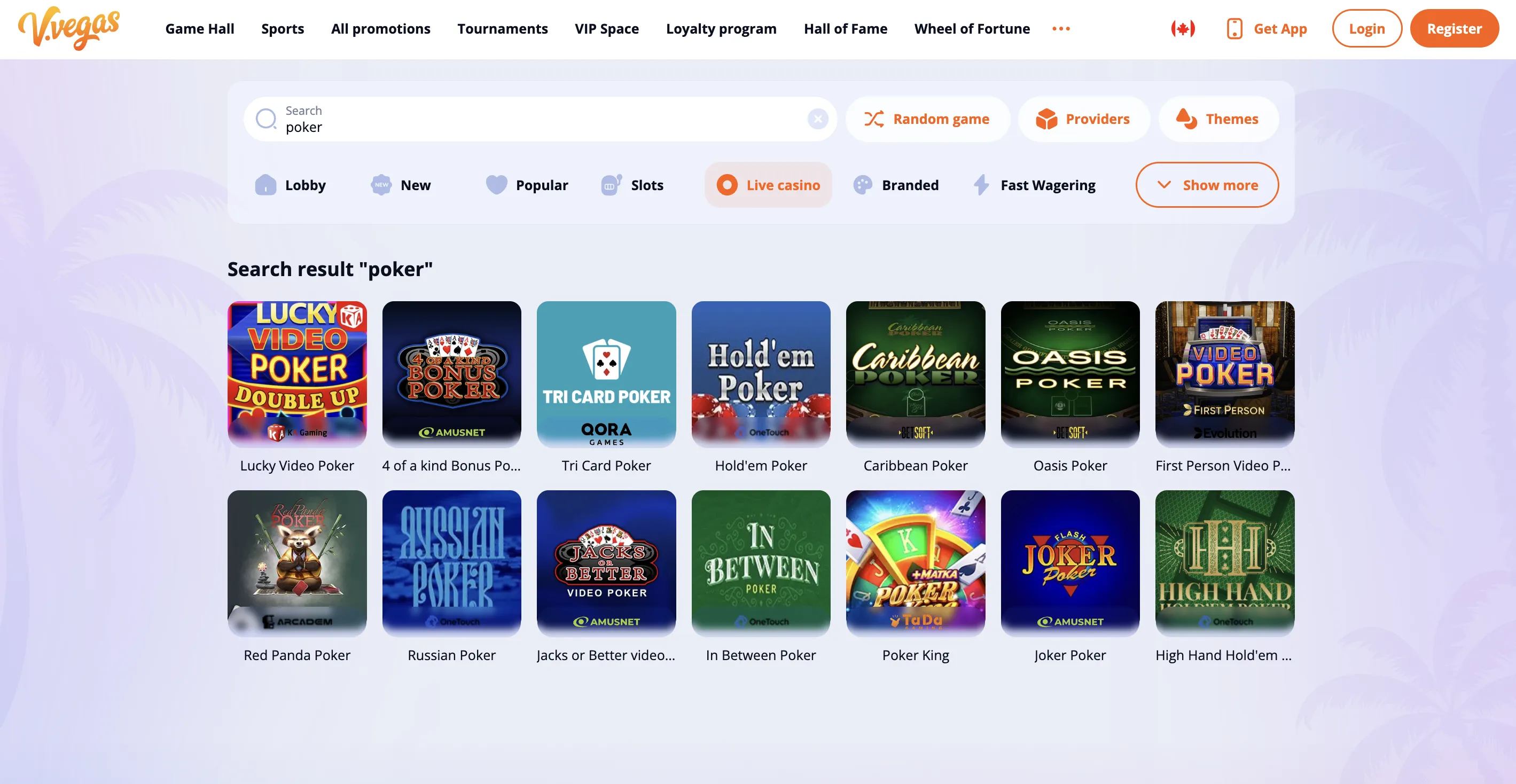
Tournament procedures add rules for exposed cards, action out of turn and showdowns. Venue and gaming-authority rules still take priority where they differ from a general guide.
Note: Seven available cards, five that count: Hold’em is simple on paper, but every betting round changes the price of reaching that final hand.
Poker in Canada bets, decisions and payout logic

Poker pots come from player contributions rather than a fixed casino payout schedule. If everyone but one player folds, the remaining player takes the pot without showing a winning hand.
The core actions are easier to compare side by side. This table also shows what each choice does to the hand or pot.
|
Action |
Meaning |
Effect |
|
🛑 Fold |
Give up the hand |
Committed chips stay |
|
✅ Check |
Add no chips |
No bet is due |
|
📞 Call |
Match the wager |
Hand stays live |
|
💵 Bet |
Open wagering |
Opponents respond |
|
⬆️ Raise |
Increase wager |
Cost rises |
|
🔒 All-in |
Commit the stack |
Side pots possible |
If two or more players remain after the river, the pot is decided at showdown. Only chips a player is eligible to contest can be awarded to that hand. When two eligible players show identical best five-card combinations, the relevant pot is normally split according to the room's rules.
A short all-in player can win only the amount matched against that stack; later unmatched betting belongs in side pots. A raise must also meet the table's minimum-raise rule unless an all-in creates a special case, so not every extra chip automatically counts as a full raise.
Cash games and tournaments charge differently. A cash table may take rake, often with a cap, while a tournament normally separates prize-pool money from the operator fee. Check the published cost before choosing stakes.
Poker in Canada house edge, odds and rule variations
Peer-to-peer poker has no universal fixed house-edge percentage. The operator normally earns through cash-game rake or a tournament fee, while players compete for the pot. A poker decision is therefore about price and probability rather than a posted payout.
Outs are unseen cards that may improve a hand, while pot odds compare the cost of a call with the amount available to win. For example, if the pot is C$60 and an opponent bets C$20, calling C$20 creates a C$100 pot. That means risking C$20 to contest a final pot of C$100, so the call represents 20% of the total pot. The calculation can guide a choice, but it cannot predict the next card.
Author’s note — Ethan Montgomery: Poker has no fixed house edge to memorize: the price of a hand comes from rake, pot size and the decisions made before the cards run out.
Rules vary by format. No-limit Hold'em allows full-stack wagers, fixed-limit games cap bet sizes, and tournaments use rising blinds and elimination. Cash games allow more flexible sessions.
|
Format |
Main cost |
Betting structure |
Main difference |
|
💵 Cash game |
Rake |
Table stakes |
Flexible session length |
|
🏆 Tournament |
Entry fee |
Rising blinds |
Elimination and payouts |
|
🚀 No-limit |
Room fee model |
Up to full stack |
Wider bet sizing |
|
📏 Fixed-limit |
Room fee model |
Fixed bet sizes |
Restricted raises |
Two Hold'em tables can use identical hand rankings while charging different rake or buy-ins.
Poker in Canada beginner mistakes to avoid

Beginners often know the hand rankings but make avoidable mistakes with position, betting decisions and bankroll control. A simple checklist helps keep those errors from becoming expensive habits.
Use these checks before and during a session:
-
Do not play every starting hand. Position and hand quality should affect whether you enter the pot.
-
Do not call just to see an opponent's cards. A call should have a reason tied to price and likely range.
-
Do not chase losses. Higher stakes after a bad hand increase risk rather than recover earlier money.
-
Do not ignore rake or fees. Repeated charges reduce the bankroll available for later hands.
-
Do not assume all-in means the whole pot. A shorter stack may be eligible only for the main pot.
-
Do not treat a sound decision as a guaranteed win. The remaining cards are still uncertain.
⭐ Expert opinion: For beginners, disciplined hand selection and fixed stake limits are usually more valuable than copying advanced plays too early.
Keep poker money separate from rent, bills, food and debt payments. Shorter sessions can also reduce mistakes caused by fatigue.
Playing poker online in Canada
There is no single national online-poker licence across Canada. Real-money access depends on provincial rules, so availability, age limits and operator requirements can differ by location.
Ontario has a regulated private iGaming market, where players must be 19 or older and physically located in the province to place wagers. Alberta also operates a regulated private market. Elsewhere, provincial products remain important: PlayNow offers poker in British Columbia and Manitoba, while Loto-Québec provides online poker for eligible Quebec residents. The online casinos in Canada directory is separate from this poker rules guide and can be used for broader operator comparisons.
Free or play-money access is not guaranteed. Some poker rooms offer demo-style or play-money tables that help beginners learn the interface, betting order and table controls without risking funds. If a room does not advertise this option, do not assume it is available.
Before joining a real-money table, check the legal age, physical-location rules and operator status for the relevant province.
💡 Important: A poker site available in one province should not be treated as automatically available across Canada. Provincial eligibility must be confirmed before registration or wagering.

Responsible gambling limits for poker in Canada
This guide is for adults aged 18+ only. Provincial minimums still apply: Ontario and British Columbia require 19+ for the regulated products discussed here, while Manitoba and Quebec allow eligible players from 18.
Set a money limit and a time limit before the first hand. Do not increase either because a session is losing or a tournament runs longer than expected. Deposit, session and self-exclusion tools can add friction when a planned limit is reached.
In May 2026, iGaming Ontario introduced BetGuard, a centralized self-exclusion tool covering regulated online gambling in Ontario. It gives players one market-wide route to suspend access across all covered operators.
Self-exclusion is a way to suspend access when taking a break is safer. If poker stops feeling recreational, stop playing and use the responsible-gambling support available in the relevant province.
Conclusion

Learning how to play poker in Canada starts with the order of a Hold'em hand: blinds, two hole cards, four betting rounds and the best-five-card rule. Once that sequence is familiar, you can focus on position, price and pot eligibility.
Cash games suit players who want more control over session length, while tournaments use scheduled blind levels and a fixed entry structure. In either format, the table rules, rake or fees and bankroll limits should be checked before play.
Before making a real-money deposit, check provincial access, legal age, rake or tournament fees and table limits. Those checks reduce avoidable mistakes, but they cannot remove variance or guarantee a winning session. For broader operator comparisons, the best online casinos Canada page is kept separate from this instructional guide.
About Ethan Montgomery

Ethan Montgomery writes about Canadian online casinos, payment options, and provincial gambling regulations for shawarmadeorzaottawa.ca. His content is based on operator terms and official regulatory sources, with licensing details, payment requirements, and responsible gambling information checked before publication.
Frequently asked questions
-
Learn the betting order, hand rankings and best-five-card rule first. Before acting, check your position, the amount required to call, the size of the pot and how many players remain. Play-money tables can help with the interface when available, but beginners should still understand table limits, rake and the rules that apply before moving to real-money play.
-
Start with blinds, action order, legal betting actions, hand rankings and side-pot eligibility. A player should also understand when checking is allowed, what counts as a legal raise and how an all-in affects the pot. Tournament procedures can add extra rules for exposed cards, showdowns and irregular action, so the venue's published rules should also be checked.
-
Poker has no universal fixed house edge in peer-to-peer games. Players use probabilities, outs and pot odds to compare the cost of continuing with the amount available to win. The operator generally earns through cash-game rake or a tournament fee, so those charges affect the bankroll even though they do not create one standard house-edge percentage.
-
Follow the legal age and access rules for the province, then set a fixed poker budget and session limit before playing. Do not increase either after losses or because a tournament lasts longer than expected. Deposit limits, session controls and self-exclusion can provide additional safeguards. If poker stops feeling recreational, stop and use the responsible-gambling support available in the province.