How to play craps in Canada
Learning how to play craps in Canada means understanding how a round works, which bets are available, how payouts are calculated, and how the house edge changes from one wager to another. Every result comes from the same two dice, but the cost of each bet can vary sharply: the Pass line carries a 1.41% house edge, while Big 6 or 8 is 9.09%.
-
100% bonus on the first deposit up to €150 + 150 free spins
- Fast withdrawals
- Crypto-friendly
- User-friendly website design
Providers:

 Payments:


 Betonred
- 5
-
100% welcome bonus up to €500 + 200 free spins
- Wide variety of games
- Easy-to-use interface
- Generous bonuses and promotions
Providers:
Payments:
Spinanga- 5
-
100% bonus on the first deposit up to $500 + 200 free spins on selected games
- Supports cryptocurrency payments
- Mobile-friendly design
- Large selection of live dealer games
Providers:
Payments:
Mr.Pacho- 5
-
Up to 200% bonus on their first deposit
- Wide range of betting options with high odds
- User-friendly website interface
- Reliability and fast withdrawals
Providers:
Payments:
-
100% bonus on the first deposit up to €500 + 200 free spins
- Over 2000 games from leading providers
- 24/7 customer support
- Fast withdrawal processing
Providers:
Payments:


This guide explains the come-out roll, point phase, Pass and Don’t Pass bets, Odds, Place bets, and common beginner mistakes. It also covers online and live play, provincial access, and responsible gambling limits for adult players in Canada, without ranking or promoting casino operators.
Written by Ethan Montgomery
Fact-checked by Noah Campbell
Published: September 7, 2026
Last updated: September 7, 2026
Methodology: We review craps through confirmed table rules, bet types, payout structures, house edge, dice procedures, common terminology, Canadian casino context and responsible-gambling guidance. No strategy is presented as a guarantee of profit.
How to play craps in Canada: quick start

The simplest route is a line bet followed by one point until that number or 7 appears. Every round starts with the come-out roll. On Pass, 7 or 11 wins, while 2, 3 and 12 lose. A 4, 5, 6, 8, 9 or 10 establishes the point. The shooter then rolls until the point repeats or 7 ends the round.
The practical core of how to play craps can be reduced to three rules that apply after the come-out roll has created a point:
-
Once a point is established, the round continues, and the puck moves to ON above that number.
-
After a point is established, players can make additional bets that are available during the point phase.
-
If a 7 arrives before the point repeats, the round ends and the dice move to the next shooter.
The essential skill is recognizing which bets are active at each stage and what each choice costs from the very first throw onward. Once that sequence is clear, the layout becomes a map of decisions rather than a field of unrelated boxes.
The rules and figures used throughout this guide follow standard come-out and point procedures. House-edge comparisons cover Pass, Don’t Pass, Odds, Place and Big 6/8 bets, while payouts of 2:1, 3:2 and 6:5 are matched to the relevant point numbers. This keeps the examples consistent with the same table logic used in the sections below.
Craps in Canada rules and table setup

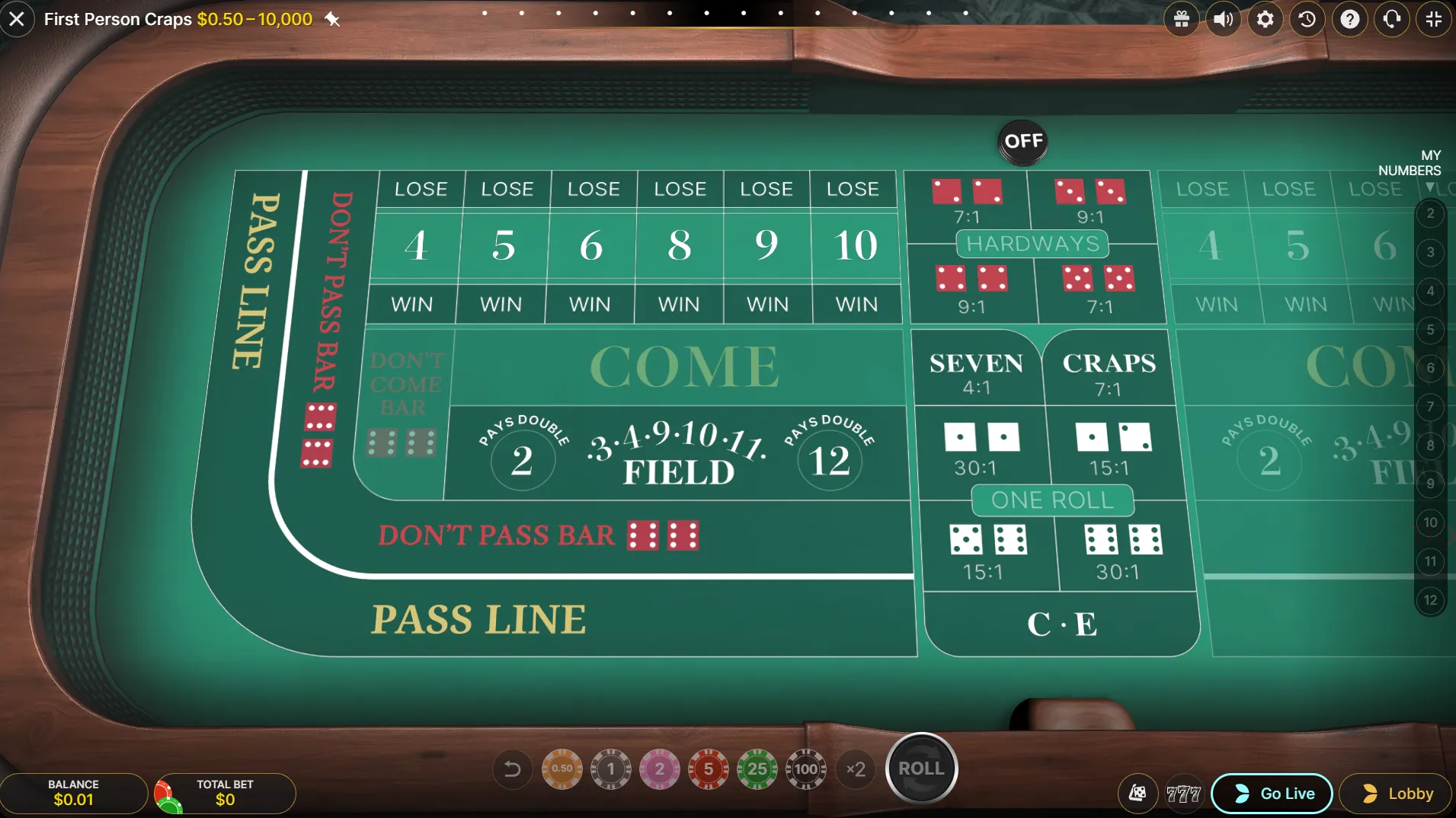
A craps layout is mirrored so both ends show the same betting areas. That duplicated design lets players on either side read the table without changing the basic betting logic. Two dice, one shooter and a puck define the round: OFF before the come-out roll, ON after a point is set. The crew works the box and stick while everyone at the rail bets on the same throw. Canadian land tables seat roughly a dozen players; software gives one seat on the same layout.
Regardless of venue, a round follows the same sequence:
-
Put a Pass or Don’t Pass wager down while the puck shows OFF.
-
Read the come-out result: 7 or 11 settles the line, while the craps numbers settle it the other way.
-
If 4, 5, 6, 8, 9 or 10 appears, mark that total as the point.
-
While the point remains active, add Odds behind the line or choose a Come or Place bet.
-
Keep following the rolls until the point repeats or a 7 appears first.
-
A repeated point pays the relevant line; a 7-out defeats the line bets and passes the dice onward.
Don’t Pass reverses the opening: it wins on 2 or 3, loses on 7 or 11, and treats 12 as a standoff. After a point, it wins if 7 arrives first. Much of how to play craps is procedural: read the puck before deciding where the next chips belong.
Craps in Canada bets, decisions and payout logic

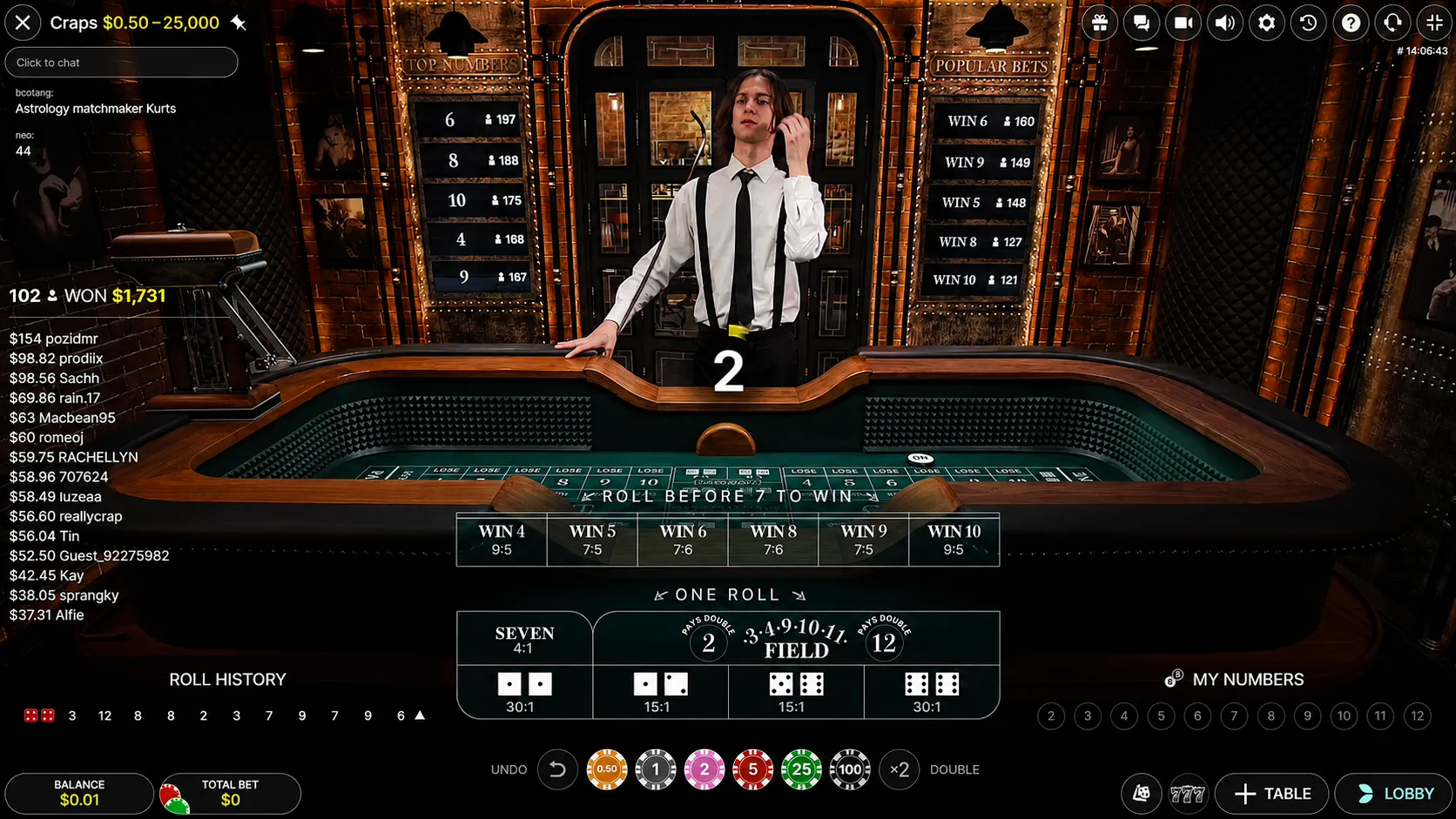
Every betting area uses the same dice, but settlement, payout and cost differ. Odds payouts depend on the point: 2:1 on 4 or 10, 3:2 on 5 or 9, and 6:5 on 6 or 8. With point 10, C$20 in Odds wins C$40 on top of the stake, with no house margin on that portion.
Bets appear naturally in this order as a round develops:
|
Bet |
When it goes down |
What it does |
|
🎲 Pass line |
Before the come-out roll |
Wins on 7 or 11, loses on 2, 3 or 12, otherwise sets the point |
|
⛔ Don’t Pass |
Before the come-out roll |
Wins on 2 or 3, loses on 7 or 11, 12 is a standoff |
|
➡️ Come |
After the point is set |
Runs come-out logic again on the next throw |
|
🎯 Odds |
After a point is established |
Pays 2:1 on 4 and 10, 3:2 on 5 and 9, 6:5 on 6 and 8 |
|
🔢 Place 6 or 8 |
Any time the puck reads ON |
Wins if the number rolls before a 7, at a 1.52% edge |
Chip placement determines settlement; nothing said after the dice leave the hand changes it. The decision therefore has to be made before the throw is already in motion. Place bets on 4, 5, 9 and 10 remain available throughout the round and charge for that access.
Craps in Canada house edge, odds and rule variations
Neighbouring boxes can have very different long-run costs even though one roll decides them. That is why the printed payout and house-edge information matters as much as the number being backed. These figures assume standard rules and a wager left active for a full round; single-roll propositions are excluded.
|
Bet |
House edge |
Condition |
|
🎯 Odds |
0% |
Available only behind Pass or Come bets |
|
⛔ Don’t Pass |
1.36% |
Lowest standalone line bet |
|
🎲 Pass |
1.41% |
The standard entry bet |
|
🔢 Place 6 or 8 |
1.52% |
Cheapest of the Place numbers |
|
🎰 Place 5 or 9 |
4.00% |
Almost three times the Pass line |
|
🧱 Place 4 or 10 |
6.67% |
Longest payout, highest cost |
|
🚫 Big 6 or 8 |
9.09% |
Same numbers as Place 6 or 8, six times dearer |
Rule variations change the mix more than these figures. Check the table’s Odds limit, as it determines how much can be added to an eligible line bet and affects the overall house edge of the combined wager.
From Don’t Pass at 1.36% to Big 6 or 8 at 9.09%, the craps layout spans nearly a sevenfold difference in cost even though the same shooter and the same dice decide every wager.
Craps in Canada beginner mistakes to avoid

Beginners often pay for procedural choices. New players in Canada repeat a short group of habits that either raise playing costs or weaken session control.
-
Choosing Big 6 or 8 at 9.09% when the same totals can be covered as Place bets at 1.52%.
-
Ignoring the table’s Odds limit when deciding how much of the bankroll to commit to a round.
-
Trying to place an Odds wager when no eligible line bet is active.
-
Increasing a line wager after a 7-out in an attempt to recover what was lost in the previous round.
-
Beginning play without deciding on a loss limit before the first come-out roll.
Avoiding these five habits cannot make craps profitable, and no betting pattern can. It can keep the cost of learning how to play craps closer to the house edge of the wagers actually used.
Playing craps in Canada online

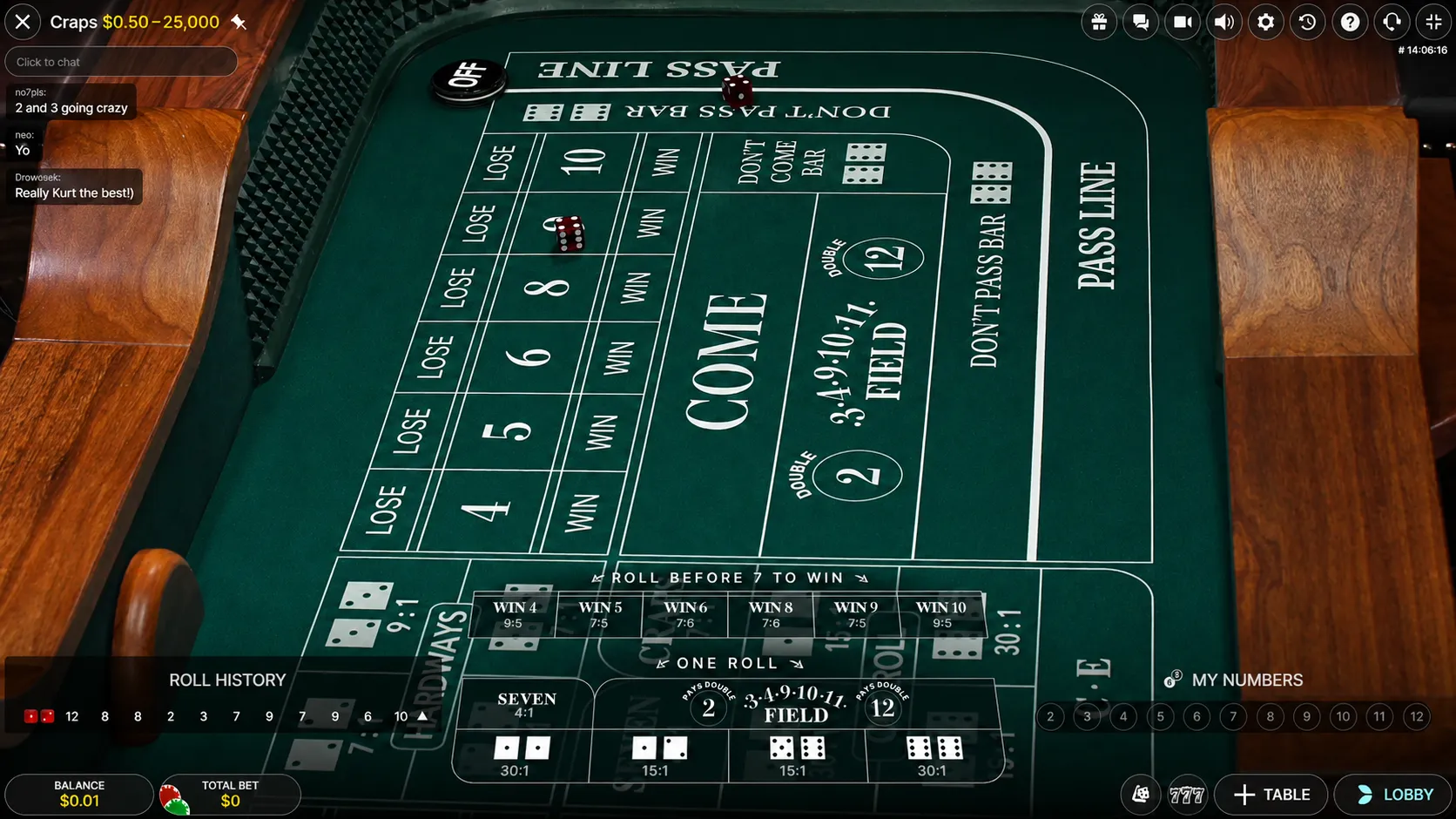
Online craps comes in two formats, and the rules stay recognizable across both. Software tables use a random number generator and settle rolls in seconds; live versions stream a physical table with a dealer. Practice fits software because how to play video craps follows the same core rules as felt play and commonly offers a demo mode with nothing at stake. Live tables rarely do.
Canada has no federal online-casino licence; regulation is provincial. Ontario first opened to private operators, supervised by the AGCO with iGaming Ontario as the counterparty from April 2022. Alberta became the second such market in July 2026. When comparing private operators, players may also come across the LeoVegas CA online casino brand, with availability depending on provincial regulation. Elsewhere in Canada, provincial platforms include BCLC PlayNow, Loto-Québec Espacejeux, ALC and SaskGaming.
For those who prefer live tables in person, Hard Rock Hotel & Casino Ottawa opened on 3 July 2025 as a C$350-million property with up to 1,500 slots and 40 live-action table games. Its published list includes craps alongside blackjack, roulette and baccarat. For a player in the capital region, it is the nearest live craps pit, with table minimums set by the floor.
Responsible Gambling limits for craps in Canada
Legal age comes first: 19 in most of Canada, but 18 in Alberta, Manitoba and Quebec. Craps resolves rounds in seconds, so a bankroll can move faster than in a slower game. Deposit, loss and time limits work best when set before play, rather than adjusted after results begin to move the bankroll. Every provincial operator also offers a self-exclusion programme that blocks account access for a chosen period.
Three services support those safeguards:
-
ConnexOntario – a helpline covering gambling, mental health and substance use concerns.
-
GameSense, operated through BCLC – player education focused on odds and game mechanics.
-
Responsible Gambling Council – prevention research and public programmes.
A session limit should be treated like a table rule: set in advance and never increased in the middle of a round.
Conclusion

Bet choice drives the built-in cost. Pass at 1.41% with Odds behind it, or Don’t Pass at 1.36%, sits near one end; Big 6 or 8 at 9.09% sits at the other. The same dice settle them all.
Then check table conditions: the Odds limit, open Place numbers and whether a demo runs before real money goes down. Those details change how the session is played even when the core dice rules stay the same. None removes variance; someone who understands how to play craps can still have a losing hour.
About Ethan Montgomery
Ethan Montgomery writes about Canadian online casinos, online bingo, slots, table games, craps, and other gambling options for shawarmadeorzaottawa.ca. His content covers casino games, payment methods, operator terms, and provincial gambling regulations, with licensing information, payment requirements, game rules, and responsible gambling details checked before publication. He also reviews how craps works, including core rules, common bet types, payouts, house edge, and online and live-play formats.
Frequently Asked Questions
-
Start with Pass before the come-out roll, then follow the point until it repeats or 7 arrives. Its 1.41% house edge makes Pass one of the lower-cost standard bets available to beginners. No additional wager is required to follow a complete round. No additional wager is required for a complete session.
-
The come-out roll and point rule control the round: 7 and 11 settle the line one way, while 2, 3 and 12 are the craps totals. Any other total becomes the point. Knowing which bets stay available during that phase matters more than memorizing exotic centre-table wagers.
-
House edge represents a wager’s long-run mathematical cost. It ranges from 0% on Odds to 9.09% on Big 6 or 8 under the rules used in this guide. Odds carry no house edge but are available only behind an eligible Pass or Come bet. Place 4 or 10 costs 6.67%, more than four times Pass at 1.41%.
-
The minimum age is 19 in most of Canada and 18 in Alberta, Manitoba and Quebec. Set deposit, loss and time limits before a session. Since craps rounds can settle in seconds, time limits matter alongside money limits. Provincial self-exclusion, ConnexOntario and the Responsible Gambling Council provide routes away from play.